
Terrebonne Projected and Actual Release
A projected release date is an agency calculation for a sentenced person. Louisiana DPS&C uses the exact label “projected release date (if applicable).” The date can reflect the sentence, received court papers, time credit, good-time eligibility, and other rules. It remains subject to change. An actual release date records a completed physical exit from a specific custody period. The two should never be treated as synonyms.
Pretrial detention works differently. A person in the Jerry J. Larpenter Criminal Justice Complex while a charge is pending has no sentence end to calculate. Bond, recognizance, dismissal, a court order, or later disposition can end that detention. Another agency’s hold can prevent a community exit even after the local court authorizes release. TPSO and the 32nd JDC are therefore the practical sources for the next step, not a generic sentence calculator.
Find Terrebonne Inmate Release Dates
First classify the case. Louisiana often assigns state-sentenced people to local jails, so the building alone does not identify the legal custodian. A person can be physically in Terrebonne Parish yet have a DPS&C sentence computation. A short local sentence may remain a TPSO and court matter. Federal custody requires federal sources.
- Check the TPSO current-incarceration portal and note the access time. Presence supports current local display, not a calculated release date.
- Read the latest 32nd JDC sentencing or custody minute. Identify whether the person is pretrial, locally sentenced, or committed to DPS&C.
- For a state sentence, call 225-383-4580 with the DPS&C number, or the name and date of birth. Ask for the “projected release date (if applicable).”
- If the state has no calculation, use the time-computation line at 225-342-0799. Sentencing paperwork may not yet have arrived.
- For a local parish sentence, ask TPSO for its computed date and compare it with the court’s commitment and credit for time served.
- After the projected date, confirm community release versus transfer through the releasing agency and its movement record.
The Terrebonne Parish release search supplies the wider records sequence for a person who has already dropped from the current jail portal.
Terrebonne State Release Date Calls
Louisiana directs public state-prison searches to LAVNS or VINELink, which can show location or community supervision. The phone locator is more precise for the projected-date question. It can also provide the current facility assignment and contact. If the result identifies a P&P district instead of a prison, the person has generally moved into community supervision. That is release from imprisonment, not full discharge.
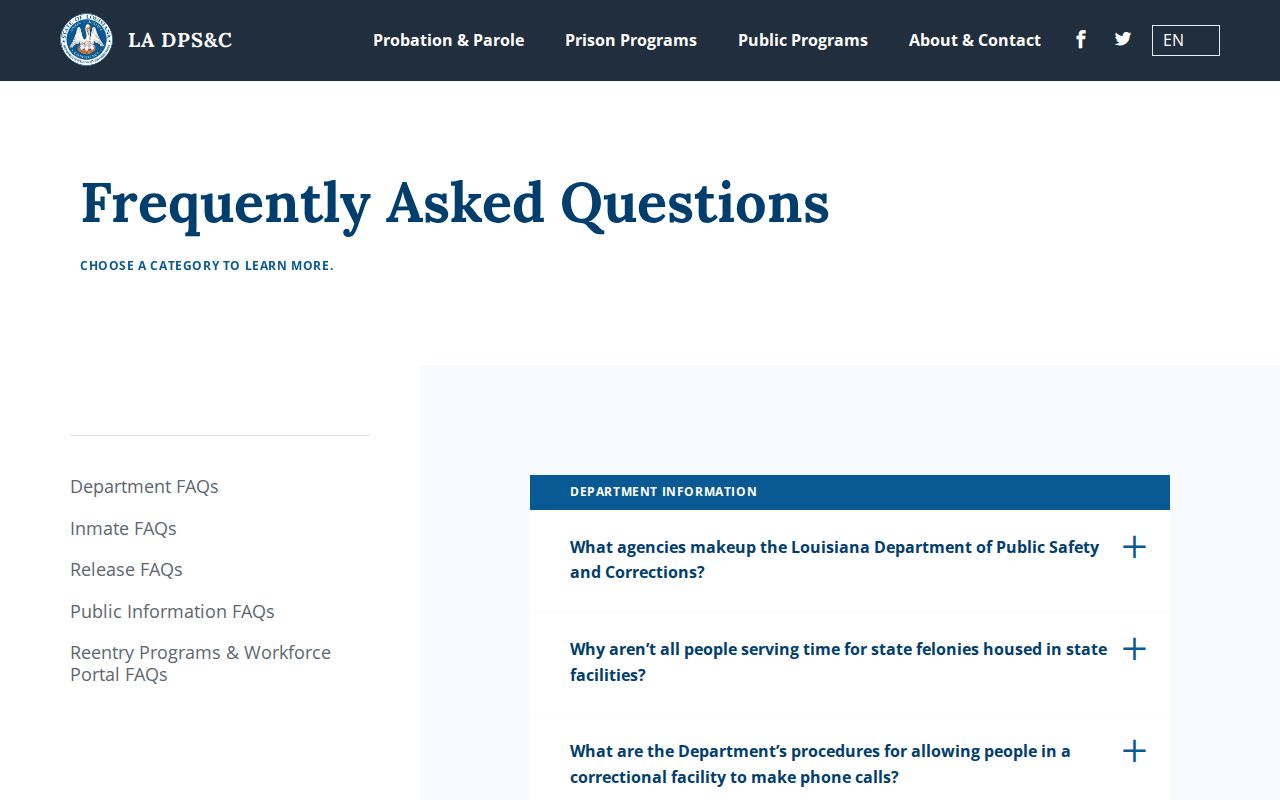
The DPS&C frequently asked questions explains the locator and why a calculation might not be available yet.
A LAVNS no-match does not show that a sentence ended. Search name variants and the ID or case number, then call. A fully discharged person may no longer appear, and the public system is not documented as a permanent historical archive.
When official sentencing documents have not reached DPS&C, staff may not yet have enough information to finish time computation. That is a processing gap, not evidence that the person has no future release. Note which document is missing, check the 32nd JDC case for the signed sentence, and return to the state line after the agency receives it. Avoid estimating a date from the term alone because jail credit and legal exclusions may not be visible.
Terrebonne Release Date Law Divide
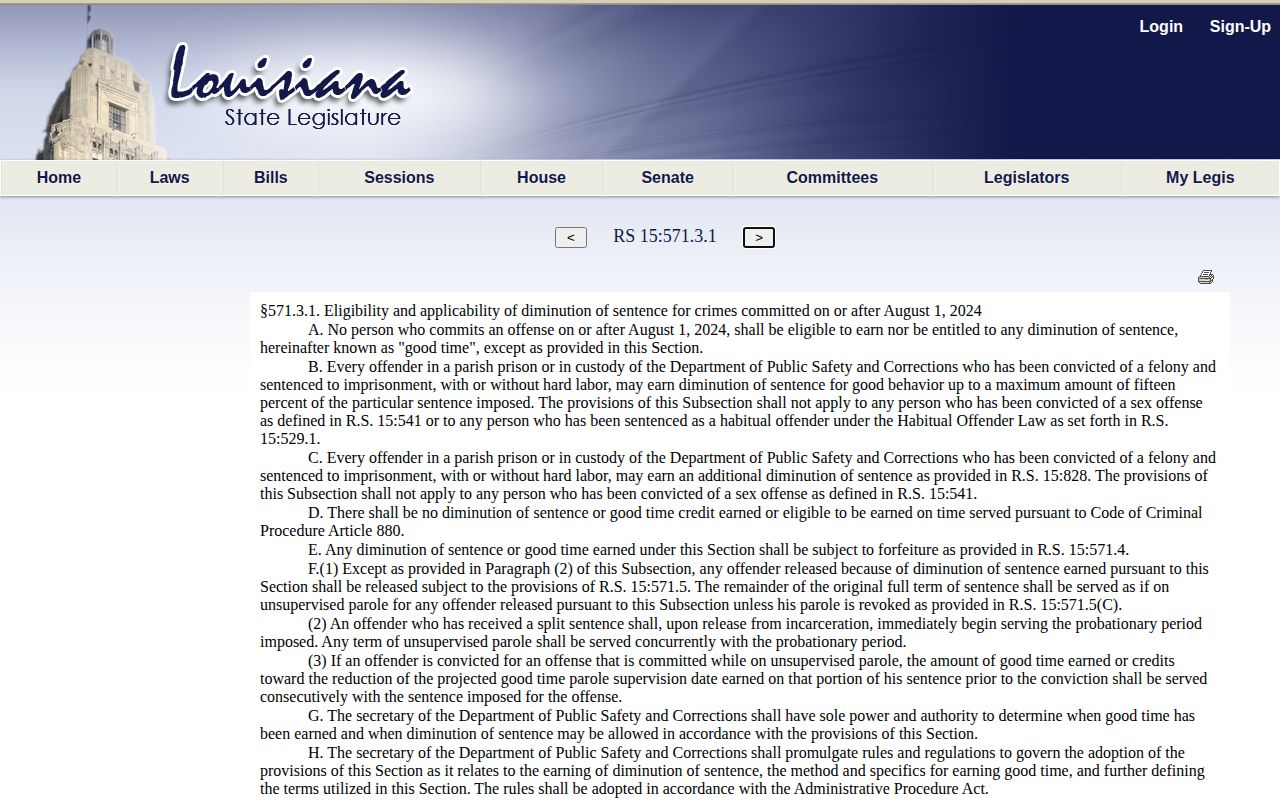
August 1, 2024 creates a major Louisiana offense-date divide. For crimes committed on or after that date, R.S. 15:571.3.1 governs ordinary diminution eligibility. Diminution means a sentence reduction earned under law, often called good time. An eligible felony offender in parish prison or DPS&C custody may earn no more than 15% of the imposed sentence under that provision. That supports an approximate 85% served shorthand only when the person qualifies for the maximum credit.
The rule is not universal. Sex offenses identified in R.S. 15:541 and habitual-offender sentences under R.S. 15:529.1 are excluded. Other credits and exceptions can apply, and disciplinary forfeiture is possible. Credit for time under Criminal Procedure Article 880 is handled separately under the statute. A person released by diminution may enter unsupervised parole for the remainder of the full term. Physical custody has ended, but the sentence framework has not necessarily expired.
A split sentence adds another layer. When Louisiana law places the probation period at the same time as the balance that follows diminution, physical release can begin a community term without ending the case. Check the sentence and P&P assignment. Calling that event a full expiration would lose the distinction between leaving a facility and completing all legal obligations.
The R.S. 15:571.3.1 statute capture below is tied directly to the post-2024 calculation rule.
Earlier Terrebonne Release Formulas
R.S. 15:571.3 remains relevant to crimes committed before the newer date. Its rates differ by sentence type, violence history, felony count, and statutory exclusions. The law includes examples such as 30 days of diminution for each 30 actual days in some parish sentences without hard labor, 3 days for each 17 for a first crime of violence, and 13 for each 7 in some eligible nonviolent DPS&C cases. Other categories use different ratios.
Those figures are not a do-it-yourself calculation. A correct date also requires the precise offense date, sentence, classification, prior record, credits, court documents, and disciplinary history. Applying the newest rule to an older offense, or selecting the most favorable older ratio without the legal record, can produce a false date. Request the agency calculation and record when it was given.
Earlier formulas also differ between some parish sentences and DPS&C cases. A ratio quoted from one subsection may have no role in another. The sheriff or superintendent has authority for qualifying parish computations, while DPS&C controls its own sentence calculations. The sentencing court supplies the judgment and credit, but the court minute alone may not show the agency’s final projected date.
- Projected date
- The responsible agency’s current calculation, subject to revision.
- Diminution
- A lawful sentence reduction earned by an eligible person.
- Detainer
- A request or hold from another authority that may prevent community release.
- Full-term date
- The sentence endpoint before considering a distinct earlier release mechanism.
Terrebonne Parish Jail Release Date
A locally sentenced person may have court-awarded jail credit and a sheriff-administered diminution calculation. Obtain the sentencing minute, commitment, booking date, and stated credit. Then ask TPSO for the computed release information. Do not subtract a general percentage. A bond exit is not a sentence calculation at all; it is pretrial release under the court and bond conditions.
TPSO Booking at 985-857-0364 and the Jail at 985-857-0361 can help distinguish a projected local completion from an actual exit or transfer. The Terrebonne Clerk Criminal Records Department maintains the case record, while Criminal Processing handles minutes and judgments. A court order can explain why custody should end, yet the jail’s movement record is the stronger source for the physical release time.
State-sentenced people housed locally stay on the state track. Transitional Work Program activity also remains a custody assignment until final release. Ask whether the controlling sentence is local or state before selecting TPSO or DPS&C for the calculation.
A local release can also be delayed by a receiving hold. If another parish, DPS&C, USMS, or ICE takes custody, the person has left the Terrebonne building without gaining community freedom. Ask TPSO to identify the receiving custodian in the movement record. Then use that system for any later projected date. The local sentence endpoint cannot predict how long the next custody period lasts.
Terrebonne Release Date Changes
A projection is a snapshot based on facts known at calculation time. Later paperwork or legal events can move it. Compare new information against the responsible agency’s latest calculation instead of trying to reconcile the numbers independently.
| Change | Possible effect | Best confirmation |
|---|---|---|
| Sentencing papers arrive | Creates or corrects the initial computation | DPS&C locator or time computation |
| Credit is added or corrected | May move the projection earlier or later | Court minute and agency calculation |
| Disciplinary forfeiture | Can remove earned diminution | Responsible corrections agency |
| Detainer or hold | Can block a community exit at the local end date | TPSO and the receiving authority |
| Court amendment | Changes the legal sentence or credit | Signed order and new computation |
| Parole action | May authorize release, deny it, or leave timing unresolved | Board result, locator, and P&P |
A parole grant is not a gate timestamp. Conditions, an effective date, a detainer, or processing can remain. A Board denial or deferral also does not create a new guaranteed date. Check the actual result and then the custody system.
Keep a simple dated log of each projection. Include the source, access time, offense-date rule cited by the agency, and any stated reason for revision. The newest agency computation supersedes an older estimate, but the older entry can explain why plans changed. Do not erase a conflict. Resolve it through the agency that owns the calculation and the court that supplied the sentence.
Confirm Terrebonne Inmate Release Dates
Near the projected date, run a Terrebonne Parish VINELink release check and register for an available status alert. Notifications depend on participating-agency data and can lag. Louisiana’s daily update statement means a very recent change may not appear at once, and public VINELink registration is not the same as restricted Louisiana Victim Outreach registration.
For a parish release, ask TPSO whether the person went to the community or transferred. Use the TPSO records request for a dated release or movement sheet. Request the exact date, time, releasing authority, and receiving agency when releasable. For a state case, call the locator and check whether the record now names a P&P office. For a sentenced federal case, use the BOP locator and its defined release field. A federal pretrial case belongs with the federal court, while an ICE transfer uses the immigration locator.
Note: Record both the projection date and the later actual event, since they answer different questions and may not match.